Ground Beef Nutrition: A Complete Guide to Every Lean Percentage (80/20 to 93/7)
Why Ground Beef is a Staple in Many Diets
Ground beef is one of the most versatile, affordable, and widely consumed meats across the globe. Whether you’re making burgers, tacos, spaghetti, or meatloaf, there’s a good chance you’re using ground beef. But beyond its popularity in the kitchen, ground beef is also a significant source of essential nutrients especially protein, iron, zinc, and B vitamins.
It’s not just bodybuilders and gym-goers who rely on it. Busy families, college students, and health-conscious eaters all find ways to include ground beef in their weekly meals. The real appeal? It fits almost any dietary lifestyle, keto, low-carb, high-protein, even gluten-free.
But here’s the kicker: not all ground beef is created equal.
Depending on the lean-to-fat ratio like 80/20, 85/15, 90/10, or 93/7 your nutritional intake can vary dramatically. This ratio determines how much fat and protein you’re actually getting in every bite, and it can impact everything from flavor to heart health.
So, whether you’re aiming for flavor-packed meals or leaner, muscle-building dishes, choosing the right ground beef starts with understanding its nutrition profile.
Understanding Lean-to-Fat Ratios in Ground Beef
When you buy ground beef, you’ve likely seen labels like 80/20 or 90/10. These aren’t just arbitrary numbers, they represent the percentage of lean meat versus fat. For instance:
- 80/20 = 80% lean meat, 20% fat
- 90/10 = 90% lean meat, 10% fat
Why does this matter?
Because that ratio directly affects not only calories and macronutrient content, but also taste, texture, and cooking behavior. Higher-fat ground beef (like 80/20) tends to be juicier and more flavorful, making it great for burgers or meatballs. Leaner blends (like 93/7), while lower in calories and fat, may turn out drier if not cooked carefully.
The USDA classifies ground beef based on these fat contents:
| Lean-to-Fat Ratio | Classification |
| 70/30 or lower | Regular Ground Beef |
| 80/20 | Ground Chuck |
| 85/15 | Ground Round |
| 90/10 or higher | Ground Sirloin |
| 93/7 or higher | Extra Lean |
Knowing what these labels mean can help you make more informed choices, especially if you’re tracking macros or aiming to eat healthier.
Ground Beef Nutrition Facts (General Overview)
Key Nutrients in Ground Beef
Ground beef isn’t just about protein, it’s a nutrient powerhouse. A 4-ounce serving of cooked ground beef (85/15) provides approximately:
- Calories: 250–290 (depending on fat content)
- Protein: 21–23 grams
- Fat: 17–20 grams
- Iron: 2.2 mg (12% DV)
- Zinc: 5 mg (45% DV)
- Vitamin B12: 2.4 mcg (100% DV)
- Niacin (B3): 4.5 mg (25% DV)
Each of these nutrients plays a vital role:
- Protein helps with muscle building and repair.
- Iron supports red blood cell production.
- Zinc aids immunity and metabolism.
- Vitamin B12 is essential for nerve function and energy.
In short, ground beef can be a great source of nourishment if chosen and cooked wisely.
Health Benefits of Consuming Ground Beef
You might be surprised to learn that ground beef offers several health benefits especially when consumed in moderation and paired with a balanced diet:
- Supports muscle growth: Thanks to its high protein content.
- Improves energy and brain function: B vitamins, especially B12, play a crucial role.
- Boosts immune system: Zinc and selenium support immune health.
- Helps in iron absorption: Heme iron from red meat is more bioavailable than plant sources.
Of course, moderation is key. Consuming ground beef daily in large portions especially high-fat versions can increase saturated fat intake, which may raise cholesterol levels over time. But used as part of a balanced diet? It’s both satisfying and nourishing.
Common Concerns About Ground Beef Consumption
Let’s address the elephant in the room:is ground beef unhealthy?
It depends.
Concerns usually arise around:
- Saturated fat and heart health
- Cholesterol levels
- Red meat and cancer risks
- Environmental impact of beef production
While it’s true that excessive red meat consumption (especially processed meats) has been linked to certain health risks, most studies point to moderation as the real solution not elimination.
Choosing leaner blends like 90/10 or 93/7, cooking at lower temperatures, and avoiding charred meat can reduce health risks. Pair it with fiber-rich veggies, healthy fats, and whole grains for a more heart-healthy meal.
And remember quality matters. Grass-fed, organic beef may offer better omega-3 and CLA (conjugated linoleic acid) content than conventional beef.
80/20 Ground Beef Nutrition
What Does 80/20 Ground Beef Mean?
The term 80/20 ground beef refers to a blend that is 80% lean meat and 20% fat. This is one of the most common varieties found in grocery stores, especially in the meat section labeled as “Ground Chuck.”
Why is it so popular?
Because the higher fat content provides a juicy, flavorful result when cooked. Whether you’re grilling burgers, searing patties, or preparing hearty chili, 80/20 beef is the go-to for taste and moisture.
However, the nutritional profile reflects its fat content. A typical 4-ounce cooked portion contains:
- Calories: ~290–320
- Protein: ~20–21 grams
- Fat: ~22–24 grams
- Saturated Fat: ~8–9 grams
That’s almost double the fat compared to 90/10 beef. But before you write it off, consider its role in cooking.
The extra fat helps retain moisture, especially on high heat or long cook times. It also creates that classic beefy flavor and crust, which leaner blends often lack.
85/15 Ground Beef Nutrition
Understanding the 85/15 Lean-to-Fat Ratio
When you pick up a pack of 85/15 ground beef, you’re choosing a balanced option that offers both flavor and nutrition. This blend contains 85% lean meat and 15% fat, which places it squarely in the middle of the ground beef fat spectrum. It’s commonly referred to as “ground round” in grocery stores.
This ratio is often favored by home cooks and health-conscious eaters who still want a decent amount of flavor but with less grease than 80/20. It’s a versatile option that works well in almost any dish from tacos and meat sauces to stuffed peppers and casseroles.
From a nutritional perspective, here’s what you can expect from a 4-ounce cooked serving:
- Calories: ~250–270
- Protein: ~21–22 grams
- Fat: ~17–18 grams
- Saturated Fat: ~6–7 grams
You’re still getting a robust source of protein and key nutrients, but with fewer calories from fat. It strikes a nice balance for those who want to reduce fat without sacrificing moisture and flavor.
Nutritional Value and Health Considerations
The 85/15 blend retains much of the rich taste associated with higher-fat beef but starts to show notable improvements in nutrition. You’ll consume:
- Less saturated fat
- Fewer calories overall
- Slightly more protein per gram (thanks to reduced fat content)
This makes it a better option for heart health and weight management compared to 80/20. Still, if you’re watching your cholesterol or managing a health condition, moderation is important.
Plus, many people find that this ratio doesn’t require draining as much fat after cooking making cleanup easier and meals healthier.
Ideal Recipes and Cooking Methods for 85/15 Beef
So, what’s the best way to use 85/15 ground beef?
Here are some winning ideas:
- Spaghetti Bolognese: Keeps the sauce rich without becoming oily.
- Stuffed Bell Peppers: Retains moisture while holding its shape inside veggies.
- Taco Meat: Browning 85/15 gives enough fat to carry seasoning well.
- Sloppy Joes: Flavorful and moist, without dripping grease.
Cooking tip: Avoid overcooking. With slightly less fat than 80/20, 85/15 beef can dry out if left on high heat too long. Medium heat and careful attention will yield the best texture and taste.
90/10 Ground Beef Nutrition
What Makes 90/10 Ground Beef Lean?
The 90/10 ratio means 90% of the product is lean meat, while only 10% is fat. This blend is often called “ground sirloin,” and it’s a lean meat option ideal for those watching their fat or calorie intake.
It’s a favorite among fitness enthusiasts, people on weight-loss plans, and anyone trying to reduce saturated fat while still enjoying beef. The low fat content doesn’t just reduce calories it also lessens the grease factor in your pan and on your plate.
Nutritional values per 4-ounce cooked portion:
- Calories: ~200–220
- Protein: ~22–23 grams
- Fat: ~10–11 grams
- Saturated Fat: ~4 grams
This blend still delivers robust micronutrients like iron, B12, and zinc, making it both nutrient-dense and calorie-conscious.
Nutritional Comparison with Higher Fat Variants
Let’s put 90/10 side by side with the more common 80/20:
| Ratio | Calories | Fat | Protein |
| 80/20 | ~290–320 | ~22–24g | ~20–21g |
| 90/10 | ~200–220 | ~10–11g | ~22–23g |
You’re shaving off about 100 calories and 10+ grams of fat per serving by going with 90/10 instead of 80/20 without sacrificing much in protein. That’s a big win if you’re trying to reduce fat intake or follow a heart-healthy eating plan.
That said, there is a tradeoff: less fat means less flavor and more risk of dryness. But don’t worry there are ways to combat that.
How to Maximize Flavor with Leaner Ground Beef
Using 90/10 ground beef doesn’t mean you have to compromise on taste. Try these pro tips to amp up flavor without adding back excess fat:
- Use broth or tomato sauce when cooking to add moisture.
- Cook with onions, garlic, or bell peppers to boost savory depth.
- Don’t overcook. Lean beef cooks faster and dries out quicker.
- Finish with herbs and spices. Paprika, cumin, and thyme work wonders.
- Marinate before cooking. A quick marinade with olive oil, vinegar, and seasonings can keep meat tender and juicy.
This blend works well in stir-fries, lettuce wraps, soups, and anywhere you want the nutrition of lean beef without too much fat.
93/7 Ground Beef Nutrition
Is 93/7 Ground Beef the Healthiest Option?
Yes and no. The 93/7 blend is often labeled as “extra lean” ground beef and is typically the leanest form you’ll find at most grocery stores. It’s an excellent choice if you’re on a low-fat, low-calorie, or high-protein diet.
A 4-ounce cooked serving generally contains:
- Calories: ~170–190
- Protein: ~23–24 grams
- Fat: ~7–8 grams
- Saturated Fat: ~3 grams
Compared to 80/20, that’s 130 fewer calories and three times less fat, a dramatic nutritional improvement.
That said, this leanness also means less natural fat for cooking lubrication, which can lead to dryness or blandness if not cooked properly.
Nutrition Breakdown of Extra Lean Beef
93/7 beef still delivers the nutritional value you’d expect from red meat:
- Rich in high-quality protein
- Excellent source of iron and zinc
- Loaded with B vitamins (especially B12 and niacin)
It’s also:
- Lower in cholesterol
- Less likely to cause flare-ups when grilled
- A smart choice for people managing high blood pressure or cardiovascular issues
So, if you’re meal prepping for weight loss or fitness, 93/7 is a smart and strategic choice.
Cooking Tips to Prevent Dryness in 93/7 Beef
Cooking extra lean beef can be tricky; it’s easy to dry it out. Here’s how to keep it tender and flavorful:
- Use moisture-rich ingredients like diced tomatoes, mushrooms, or zucchini.
- Mix with a bit of olive oil or low-sodium broth before cooking.
- Cook on medium heat, not high. It allows for more even cooking without burning the lean meat.
- Avoid overhandling the meat, especially in patties or meatballs it can make the texture tough.
Recipe tip: Try 93/7 ground beef in dishes where other ingredients provide moisture like chili, soup, or slow-cooker meals. These methods help lock in juiciness without the need for added fat.
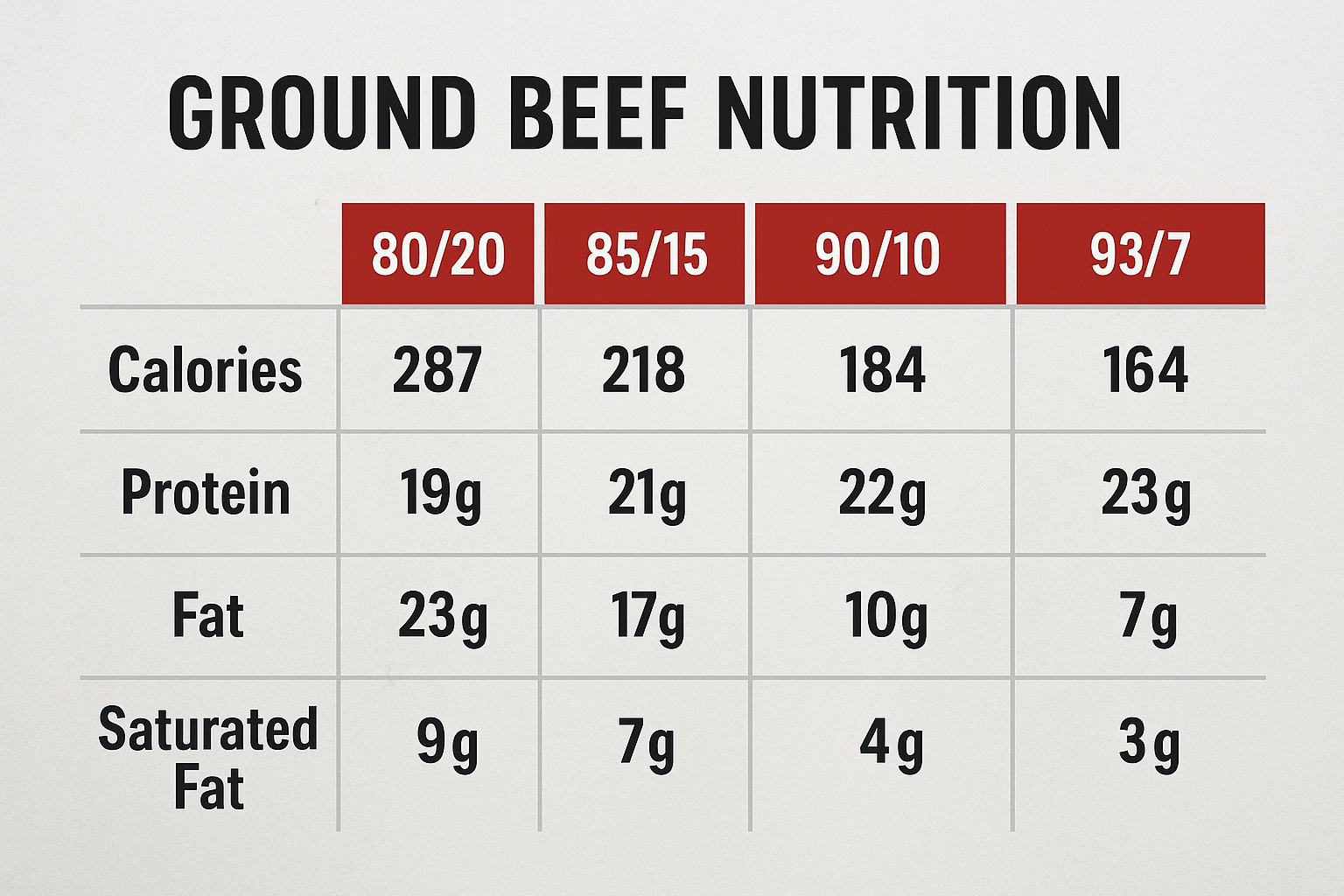
Nutritional Comparison: 80/20 vs 85/15 vs 90/10 vs 93/7
Side-by-Side Nutrient Table
To help you quickly understand how each ground beef ratio stacks up, here’s a simple comparison based on a 4-ounce (113g) cooked serving:
| Ratio | Calories | Protein (g) | Total Fat (g) | Sat. Fat (g) |
| 80/20 | 290–320 | 20–21 | 22–24 | 8–9 |
| 85/15 | 250–270 | 21–22 | 17–18 | 6–7 |
| 90/10 | 200–220 | 22–23 | 10–11 | 4 |
| 93/7 | 170–190 | 23–24 | 7–8 | 3 |
This breakdown clearly shows that as fat decreases:
- Calories drop significantly
- Protein slightly increases
- Saturated fat is cut by more than half
If you’re on a calorie deficit, aiming to lose fat, or managing heart health, 90/10 or 93/7 is the way to go. But if you want juicy burgers or flavorful meatloaf, 80/20 remains the best for taste and texture.
Which is Healthiest? Which is Most Flavorful?
It really depends on your goal.
- Healthiest: From a nutrition standpoint, 93/7 wins. It’s low in total fat, saturated fat, and calories while being rich in protein.
- Most Flavorful: 80/20 delivers the richest taste thanks to its higher fat content, making it perfect for grilling and frying.
However, flavor isn’t everything and neither is leanness. The 85/15 and 90/10 options strike a nice middle ground where you still get decent flavor and reduced fat. For families or meal prep, these ratios offer the best of both worlds.
Ground Beef Protein Content by Fat Ratio
Protein Retention in Leaner Cuts
Ground beef is a powerhouse of protein, but the amount of protein per serving is actually higher in leaner cuts. Why? Because fat doesn’t contain protein so when you have more meat and less fat, you’re getting more protein per gram.
Let’s compare:
- 80/20: 20–21g protein
- 85/15: 21–22g protein
- 90/10: 22–23g protein
- 93/7: 23–24g protein
If your fitness goals include muscle growth, post-workout meals, or maintaining lean mass, go for the leaner blends.
Also, protein from ground beef is complete, meaning it contains all nine essential amino acids your body needs. This makes it especially valuable for building and repairing muscle tissue, as well as maintaining overall health.
Choosing the Right Ratio Based on Protein Goals
Here’s how to choose based on your lifestyle:
- For muscle building: 90/10 or 93/7 gives you maximum protein without excess fat.
- For general fitness: 85/15 is a strong balance of flavor and protein.
- For bulking or high-calorie diets: 80/20 may be acceptable if overall fat intake isn’t a concern.
Don’t forget that cooking methods affect protein retention. Overcooking or boiling can reduce protein availability. Opt for grilling, baking, or pan-searing to preserve nutrients while minimizing fat loss.
Calories in Ground Beef: A Deep Dive
How Cooking Methods Affect Caloric Content
You might be surprised to learn that how you cook ground beef changes its final calorie count sometimes by a lot.
Why? Because fat renders out (melts away) during cooking.
Let’s say you start with 4 ounces of raw 80/20 beef (~290 calories). After draining the fat post-cooking, you could be left with closer to 230–250 calories, depending on how thoroughly you drain and blot it.
Cooking methods that reduce fat and calories:
- Pan-frying and draining
- Grilling (fat drips away)
- Broiling
- Baking with a wire rack to allow fat to drip
Cooking methods that retain fat:
- Boiling or stewing
- Cooking in sauces or oil without draining
Want to reduce calories without switching to leaner beef? Drain the fat. Use a colander or blot with paper towels to shave off 40–70 calories per serving.
Draining Fat – Does It Reduce Calories?
Absolutely. Draining cooked ground beef can cut total fat by 30–50%, depending on how aggressively you drain it.
Here’s an example:
- Raw 80/20 beef (4 oz): 290–300 calories
- Cooked, drained: 230–250 calories
- Cooked, drained + rinsed with hot water: ~200–220 calories
Yes, rinsing may seem strange but it works. Just remember to pat it dry afterward to avoid soggy meat.
While you’ll lose a little flavor, this is a smart move if you’re meal prepping or managing a strict diet. And it’s a great hack to make high-fat beef work for you.
Fat Content in Ground Beef Explained
Types of Fats in Ground Beef
Ground beef fat isn’t just one thing. It contains several types of fat:
- Saturated Fat: About 35–45% of total fat; linked to heart disease when overconsumed.
- Monounsaturated Fat: Around 40% of fat; can support heart health (like olive oil).
- Polyunsaturated Fat: A smaller portion; includes omega-6 fatty acids.
- Trans Fat: Naturally occurring in beef in very small amounts (not artificial trans fats).
Here’s how a typical 85/15 serving breaks down fat types:
- Total Fat: 17g
- Saturated Fat: 6.5g
- Monounsaturated Fat: 7g
- Polyunsaturated Fat: 0.5g
- Trans Fat: <0.5g
So, while saturated fat is present, almost half the fat in beef is actually heart-friendly monounsaturated fat.
Saturated Fat vs. Unsaturated Fat in Ground Beef
There’s a lot of fear around saturated fat, but recent research shows that context matters. Saturated fat from whole foods like beef is not as harmful as processed fats found in packaged snacks or fast food.
That said, moderation is still key. The American Heart Association recommends limiting saturated fat to no more than 13g per day on a 2,000-calorie diet.
If you’re worried about fat:
- Choose leaner ratios (90/10, 93/7)
- Drain and blot fat after cooking
- Pair beef with heart-healthy sides like avocado, olive oil, leafy greens, and whole grains
This way, you still enjoy the flavor and nutrients of beef without overdoing it on the fat front.
Healthiest Ground Beef Option for Weight Loss
Choosing the Right Lean Ratio for a Calorie Deficit
When it comes to weight loss, calories and macros matter a lot. Choosing the right ground beef ratio can help you stay in a calorie deficit without sacrificing flavor or protein. So which is best?
- 93/7 ground beef is the leanest and lowest in calories. At ~170–190 calories per 4-ounce cooked serving, it’s the top pick for weight-conscious eaters.
- 90/10 beef is a great balance if you want a touch more flavor but still need to keep fat under control.
- 85/15 and 80/20 are higher in calories and saturated fat, making them less ideal for weight loss unless you’re draining the fat or using smaller portions.
If you’re meal-prepping for a calorie-controlled diet, 93/7 should be your default. It’s lean, protein-packed, and easy to pair with veggies, quinoa, or brown rice.
Ground Beef in Keto, Paleo, and Low-Carb Diets
Ironically, while 80/20 may not be ideal for weight loss on a typical low-calorie diet, it’s actually preferred in keto and paleo diets.
Why?
- Keto diets are high in fat and low in carbs, so 80/20 fits perfectly.
- Paleo diets focus on whole, unprocessed foods grass-fed 80/20 ground beef aligns well.
- Low-carb dieters often use fattier beef to feel full longer and increase calorie density.
In this case, fat is fuel, not the enemy. That’s why understanding your dietary goals is essential. The “healthiest” beef depends on whether you’re cutting calories, reducing fat, or boosting fat for ketosis.
Is Ground Beef Good for Muscle Building?
Protein-to-Fat Ratio for Muscle Growth
Absolutely ground beef is a powerhouse for muscle building. It’s rich in complete protein and packed with micronutrients vital for recovery and muscle repair, such as iron, zinc, and B vitamins.
But here’s the key: opt for leaner cuts if you’re bulking cleanly or trying to minimize fat gain.
- 93/7 or 90/10 beef: High in protein, low in fat. Ideal for lean bulking.
- 85/15 beef: Acceptable for maintenance or dirty bulks.
- 80/20 beef: Use sparingly unless you’re aiming to increase calorie intake rapidly.
Also, beef contains creatine, a natural compound that supports ATP regeneration during high-intensity training. That’s a bonus for athletes and gym-goers.
Pair ground beef with complex carbs (like rice or sweet potatoes) post-workout for optimal glycogen replenishment and muscle growth.
Ground Beef vs. Chicken or Turkey for Bodybuilders
Here’s how ground beef stacks up against other popular proteins:
| Protein | Calories (4oz) | Protein | Fat | Iron | Taste Factor |
| Ground Beef (90/10) | ~210 | 23g | 10g | High | Rich & Savory |
| Ground Turkey (93/7) | ~160 | 22g | 8g | Medium | Mild |
| Chicken Breast | ~140 | 26g | 3g | Low | Neutral |
Takeaway: Beef wins in taste and micronutrients like iron and zinc, while turkey and chicken are leaner in fat and calories. For most lifters, alternating between these proteins offers the best mix of nutrients and taste.
Ground Beef Meal Prep Ideas by Fat Ratio
80/20 Recipes for Flavor and Juiciness
Fat brings flavor, and 80/20 ground beef delivers that in spades. It’s perfect for indulgent meals or cheat-day recipes.
Best uses for 80/20:
- Smash Burgers: Rich and juicy, with crispy edges
- Meatballs in Marinara: Holds moisture and shape well
- Chili: The fat renders into the broth, adding depth
- Beef Tacos: A classic, flavorful favorite
Meal prep tips:
- Cook in large batches and drain fat after browning.
- Store in airtight containers and reheat gently to retain moisture.
- Add veggies or beans to stretch servings and reduce overall calories per meal.
93/7 Recipes for Lean Eating
If you’re prepping for fitness, weight loss, or heart health, 93/7 beef is the hero of your fridge.
Top 93/7 meal prep recipes:
- Ground Beef Stir-Fry with Veggies
- Beef and Quinoa Bowls with Avocado
- Stuffed Zucchini Boats
- Lean Taco Lettuce Wraps
Tips for 93/7 meal prep:
- Add moisture with tomato-based sauces or low-fat cheese.
- Seasonally lean beef benefits from bold spices.
- Cook in non-stick pans with minimal oil.
You can cook a pound or two at once, portion into meals, and freeze or refrigerate for up to 5 days. It’s a budget-friendly, protein-rich base for endless meals.
How to Read Ground Beef Labels at the Store
USDA Labeling System
When buying ground beef, the label isn’t just decoration it’s packed with information:
- Lean-to-fat ratio (e.g., 90/10) tells you the percentage of lean meat vs fat.
- “Ground Beef” means it can contain meat and fat from any part of the cow.
- “Ground Chuck” is usually 80/20, from the shoulder rich and flavorful.
- “Ground Round” is leaner, often 85/15.
- “Ground Sirloin” is even leaner 90/10 or better.
Look for these USDA phrases:
- “USDA Inspected” = Meets federal safety standards
- “Grass-fed” = The cattle were fed grass (better omega-3s)
- “Organic” = Raised without antibiotics, hormones, or GMOs
- “Natural” = Minimally processed (but not necessarily organic)
Understanding these terms can help you choose ground beef that aligns with your health, taste, and ethical priorities.
What “Lean” and “Extra Lean” Really Mean
According to the USDA:
- Lean beef = Less than 10g total fat, 4.5g or less saturated fat, and <95mg cholesterol per 100g (3.5 oz).
- Extra lean beef = Less than 5g total fat, 2g or less saturated fat, and <95mg cholesterol per 100g.
So if you’re buying 90/10 or 93/7, you’re officially in lean or extra lean territory.
This matters for people tracking macros or following guidelines for heart health or weight management. Don’t just look at price or branding, read the nutrition label.
Read our previous blogs about Chicken Breast Nutrition facts
Conclusion
Ground beef is far more than just a meat for burgers; it’s a protein-packed, versatile, and nutritionally rich option that fits a wide range of diets. From the flavor-packed 80/20 to the lean and clean 93/7, every ratio has its purpose.
- If you want taste and juiciness, go with 80/20 or 85/15.
- If you’re focused on fitness and fat loss, 90/10 or 93/7 is your best bet.
- For those managing heart health or calorie intake, leaner blends are safer and more effective.
The key is to match your choice of ground beef to your goals, lifestyle, and cooking method. Use what you’ve learned here to shop smarter, eat better, and enjoy every bite with confidence.
FAQs
Is grass-fed ground beef healthier than grain-fed?
Yes. Grass-fed beef typically has more omega-3 fatty acids, CLA (conjugated linoleic acid), and antioxidants. It’s also lower in total fat and calories.
Can you eat ground beef every day?
You can but moderation is key. Stick to leaner cuts and balance your meals with fiber, healthy fats, and a variety of protein sources to avoid overloading on saturated fat or cholesterol.
What is the difference between ground beef and ground chuck?
Ground beef can come from any part of the cow, while ground chuck is from the shoulder. Chuck usually has a consistent 80/20 ratio and is preferred for juicy burgers.
Is it better to cook ground beef in a pan or oven?
Both work! Pan-frying gives you a sear and faster cooking time. Baking is hands-off and allows fat to drip away. For lean beef, oven cooking helps retain moisture.
How long does cooked ground beef last in the fridge?
Up to 3–4 days when stored in an airtight container. If frozen, it can last up to 3 months. Always reheat to 165°F (74°C) before eating.
Please don’t forget to leave a review.