The Ultimate Guide to Whole Milk: Nutrition, Benefits, Comparisons, and Uses
What Is Whole Milk?
Whole milk, also known as full-fat milk, is the most natural form of cow’s milk that hasn’t undergone fat reduction processes. When milk is collected straight from the cow and pasteurized, it retains around 3.25% fat content by weight. That small percentage may seem minor, but it’s enough to give whole milk its creamy texture and rich flavor that distinguishes it from low-fat or skim milk. But whole milk isn’t just about fat—it’s a powerhouse of nutrients, and for decades it’s been a staple in many households around the globe.
The term “whole” doesn’t mean it’s unprocessed; it simply refers to the milk in its most nutritionally complete form after pasteurization and homogenization. Whole milk contains a healthy balance of fat, protein, and carbohydrates, along with essential vitamins like A, D, B12, and calcium, making it highly beneficial, especially for growing children and those with high caloric needs.
There’s a common misconception that whole milk is “unhealthy” because of its fat content. However, modern nutritional science is re-evaluating this belief. The natural fats found in whole milk may play an important role in satiety, nutrient absorption, and even heart health when consumed in moderation. If you’re looking for a satisfying, nutritious dairy option that fits a balanced diet, whole milk can certainly earn its place in your fridge.
It’s also worth noting that whole milk is the base for several other dairy products including heavy cream, butter, yogurt, and cheese. Its versatility in the kitchen and the body’s response to its nutrient profile make it an important part of the dairy food chain.
Whole Milk vs. Vitamin D Milk: What’s the Difference?
Here’s where things often get confusing: whole milk and vitamin D milk are often used interchangeably on store labels, but they aren’t technically the same. Let’s clear that up.
Vitamin D milk simply refers to milk that has been fortified with vitamin D, which is a standard practice in many countries. This process began in the 1930s in the U.S. to combat rickets, a disease caused by vitamin D deficiency. Since then, almost all milk sold in grocery stores is fortified with vitamin D—regardless of whether it’s whole, 2%, or skim.
So, when you see “Vitamin D Milk” on a label, it most often means whole milk that has been fortified. However, the same fortification applies to low-fat and non-fat milk too. The confusion arises because marketing practices in the past used “Vitamin D Milk” as a way to promote the health benefits of whole milk more prominently.
In short:
- Whole Milk = Full-fat milk with ~3.25% fat
- Vitamin D Milk = Any milk (whole or reduced-fat) fortified with vitamin D
So the next time you pick up a carton labeled “Vitamin D Milk,” check the nutrition label to see if it’s truly whole milk or a lower-fat version.
Understanding the Types of Milk on the Market
Today’s dairy aisle can feel like a maze. With terms like skim, 1%, 2%, and whole milk tossed around, understanding the differences is essential. Here’s a quick breakdown of the most common types:
- Whole Milk (3.25% fat): Creamy and rich, best for those who prefer fuller flavor and fat content.
- 2% Milk (Reduced Fat): Contains 2% milk fat, a popular compromise between skim and whole.
- 1% Milk (Low Fat): Offers lower fat content while still retaining some creaminess.
- Skim Milk (Fat-Free): Virtually all the fat is removed, resulting in a thinner texture and lighter flavor.
- Lactose-Free Milk: Available in any of the fat levels above, but with lactose removed or broken down for those with intolerance.
- Organic Milk: Comes from cows not treated with antibiotics or synthetic hormones and fed an organic diet.
- Plant-Based Alternatives: Almond, oat, soy, rice, and coconut milk are now common alternatives, though their nutrition varies.
Choosing the right milk depends on your dietary needs, health goals, and taste preferences. Some people opt for lower-fat options to reduce calorie intake, while others stick with whole milk for its satiety and nutrient density. Others may go with plant-based or lactose-free options due to allergies or ethical reasons.
Whole Milk Nutrition & Calories
Whole Milk Nutrition Facts: The Complete Breakdown
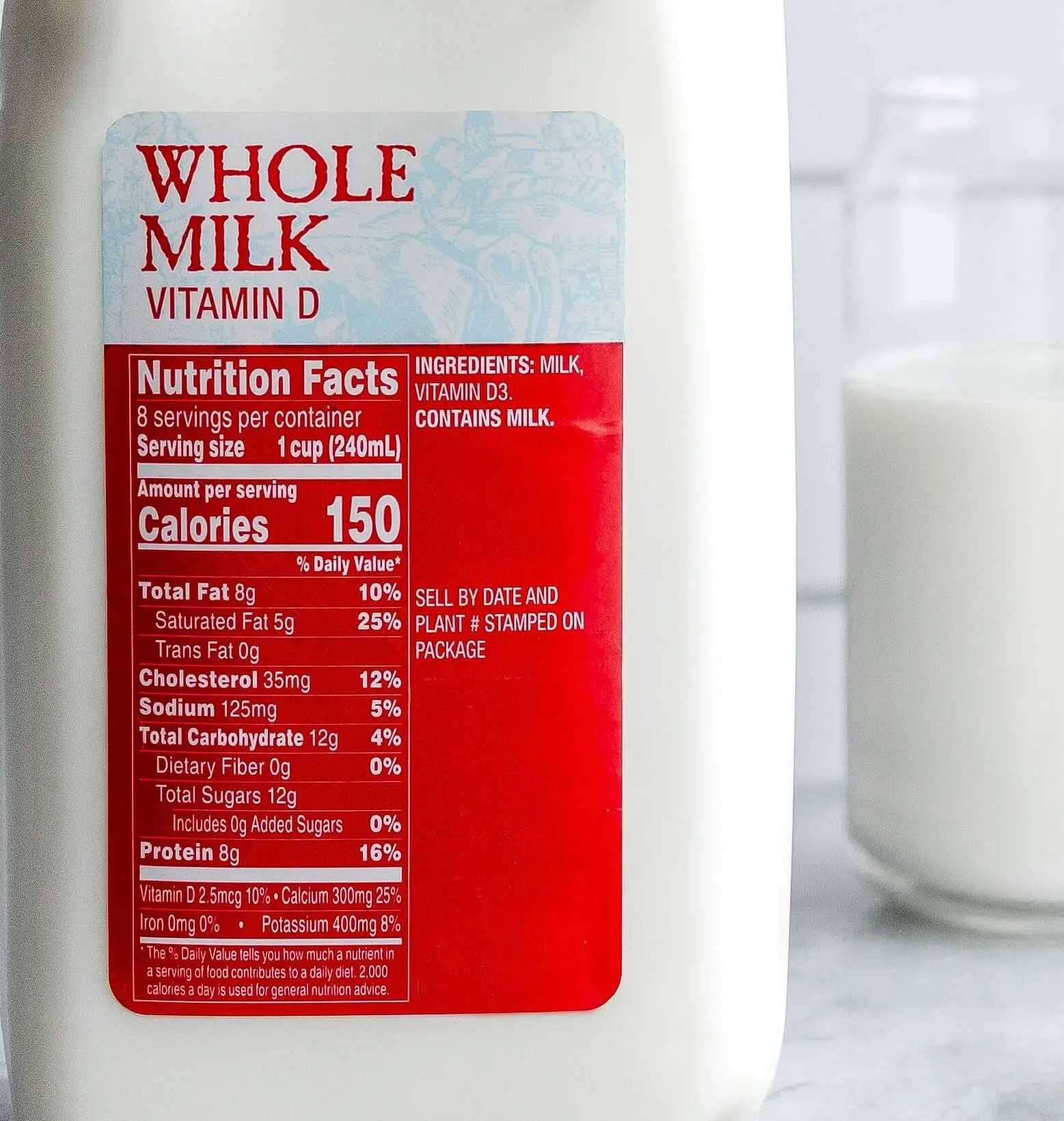
Whole milk is more than just a beverage; it’s a nutritional powerhouse. Here’s what you get in a typical 1-cup (240 ml) serving of whole milk:
| Nutrient | Amount per 1 Cup |
| Calories | 150 |
| Total Fat | 8 grams |
| Saturated Fat | 5 grams |
| Protein | 8 grams |
| Carbohydrates | 12 grams |
| Sugar (Natural) | 12 grams (Lactose) |
| Calcium | 276 mg (27% DV) |
| Vitamin D | 124 IU (15% DV) |
| Vitamin B12 | 1.1 mcg (18% DV) |
| Potassium | 322 mg (9% DV) |
| Vitamin A | 395 IU (15% DV) |
Whole milk offers a perfect combo of macronutrients and micronutrients that support overall health. The fat content enhances the absorption of fat-soluble vitamins (A, D, E, and K), while the protein content helps in muscle repair and growth.
In comparison to reduced-fat or skim milk, whole milk has a creamier texture and a slightly sweeter taste due to the higher fat content. And despite the extra calories, studies show that whole milk might help with weight management because it keeps you fuller longer—meaning you’re less likely to snack.
Additionally, milk is one of the best natural sources of calcium and vitamin D, both essential for strong bones and teeth. For kids and elderly individuals, whole milk provides the vital nutrients they need for proper growth and maintenance.
Whole Milk Health Impact
Is Whole Milk Good for You?
Let’s face it: whole milk has gotten a bad rap over the years, mainly due to its fat content. But is that reputation really justified? Actually, science is starting to say otherwise.
The key concern people have about whole milk is its saturated fat. A cup of whole milk contains about 5 grams of it. For decades, saturated fat was linked to heart disease, and low-fat diets were heavily promoted. But more recent research shows the relationship isn’t as black-and-white as once believed. Studies now suggest that not all saturated fats have the same effects, and dairy fats in particular may not increase heart disease risk the way trans fats or excessive processed foods do.
In fact, moderate consumption of whole milk has been associated with a neutral or even protective effect against some metabolic conditions. A 2018 study published in The Lancet showed that people who consumed full-fat dairy regularly had lower rates of cardiovascular disease and stroke compared to those who consumed little or no dairy at all.
Whole milk also promotes satiety—meaning you feel fuller longer. This helps reduce unnecessary snacking and could aid in weight control. Unlike sugar-laden alternatives or diet sodas that offer little nutritional value, whole milk is naturally rich in nutrients and contains no added sugars (the sugar it has is lactose, a naturally occurring milk sugar).
In summary, when consumed in moderation as part of a balanced diet, whole milk is not just “good for you”—it’s great for your bones, muscles, metabolism, and long-term health. The key is moderation and context. If your overall diet is nutrient-dense and low in processed junk, then enjoying a glass of whole milk daily could absolutely be part of a healthy lifestyle.
The Health Benefits and Risks of Whole Milk
When it comes to dairy, the health discussion often centers around the pros and cons—and whole milk is no exception. So let’s weigh both sides.
Benefits of Whole Milk:
- Bone Health: Thanks to its high calcium and vitamin D content, whole milk is one of the best natural sources for maintaining bone density and preventing osteoporosis.
- Muscle Growth and Repair: Each cup packs about 8 grams of high-quality protein, containing all nine essential amino acids needed for muscle building.
- Weight Management: Ironically, despite being higher in calories, whole milk may help regulate appetite and promote fat loss due to its satiety-inducing fat content.
- Heart Health (Yes, really!): As mentioned earlier, recent studies suggest that the type of saturated fat in dairy doesn’t negatively affect cholesterol the way once believed.
- Nutrient Absorption: The fat in whole milk enhances the absorption of fat-soluble vitamins, including vitamins A, D, E, and K.
- Fertility & Hormonal Health: Whole milk may support hormonal balance in women, particularly because of its full-fat profile.
Risks of Whole Milk:
- High in Saturated Fat: If consumed excessively, whole milk may contribute to elevated LDL (bad cholesterol) in people with existing health issues or genetic predispositions.
- Lactose Intolerance: Many adults are lactose intolerant and can’t digest milk sugar (lactose), leading to bloating, gas, or discomfort.
- Allergies: Milk protein allergy is different from lactose intolerance and can cause more severe reactions, especially in young children.
- Caloric Density: If you’re watching your calorie intake for weight loss, it’s easy to overdo it with multiple servings of whole milk a day.
Ultimately, the benefits of whole milk far outweigh the risks for most healthy individuals. But if you have any underlying health concerns or are unsure, always check with a healthcare provider or nutritionist.
Whole Milk for Adults: Yay or Nay?
You might think that whole milk is just for kids—but adults can benefit just as much, if not more, from incorporating it into their diet. Here’s why.
As we age, our bone density naturally decreases, making calcium and vitamin D intake crucial for adults, especially post-30 when bone mass starts to decline. Whole milk provides a natural combo of both nutrients in one tasty glass.
For adults who work out or engage in strength training, the high-quality protein in whole milk supports muscle recovery and lean mass preservation. And because of the healthy fat content, you’ll also stay fuller longer—helping manage weight gain from unhealthy snacking or binge eating.
Plus, let’s not forget whole milk’s role in hormonal health. Full-fat dairy has been linked to improved fertility and hormonal balance in women, and testosterone regulation in men. These benefits are often lost in low-fat versions where fat-soluble nutrients are removed or reduced.
Of course, if you’re lactose intolerant or have a dairy allergy, whole milk isn’t the best choice. But if your body tolerates it well, adding a glass or two per day could actually boost your long-term health and energy levels.
Whole Milk Comparisons
Whole Milk vs. 2% Milk
This is one of the most common matchups in the dairy aisle. Both whole milk and 2% milk are cow’s milk, but the fat content is where they significantly differ.
- Whole Milk: Contains about 3.25% milk fat
- 2% Milk: Contains 2% milk fat (also known as reduced-fat milk)
The difference may seem small, but it has a noticeable impact on taste, texture, and satiety. Whole milk is richer and creamier, while 2% is lighter but still retains some creaminess compared to skim milk.
From a calorie perspective:
- Whole Milk = ~150 calories per cup
- 2% Milk = ~120 calories per cup
So you’re saving about 30 calories per serving with 2%, but you’re also getting less saturated fat and slightly less vitamin A (as fat enhances vitamin A absorption).
Which is better? It really depends on your dietary needs:
- Choose whole milk if you prefer richness, want to feel fuller longer, and can handle the extra fat/calories.
- Choose 2% milk if you’re trying to reduce fat intake without sacrificing all the creaminess.
Whole Milk vs. Skim Milk: Which Is Healthier?
Skim milk, or non-fat milk, is often seen as the “healthier” choice. But is it really?
Skim milk has zero fat and around 80-90 calories per cup. It’s a lean option for those strictly counting calories or trying to cut saturated fat. But that lack of fat can be a downside too.
Without fat:
- Satiety is reduced, making you feel hungrier sooner.
- Fat-soluble vitamins (A, D, E, K) are harder for your body to absorb.
- The texture is thin, and many people find the taste less satisfying.
Whole milk, on the other hand, supports better nutrient absorption and provides a more balanced nutritional profile. Some studies have even shown that people who consume whole milk are less likely to be overweight compared to those who drink skim milk—possibly due to the satiety factor.
Bottom line: if you’re healthy and active, whole milk might actually be a smarter and more satisfying choice than skim.
Reduced-Fat vs. Whole Milk: What’s the Healthiest Option?
Reduced-fat milk (1% or 2%) falls somewhere between skim and whole milk, making it a common compromise for those torn between flavor and fat.
Health Considerations:
- Reduced-fat options may be beneficial for those managing cholesterol or calorie intake.
- But they often lack the satisfying mouthfeel and complete nutrient absorption that whole milk provides.
There’s also growing evidence that the fat in dairy may not be harmful, and that cutting it out may not offer as many heart-health benefits as once thought. If your diet is otherwise low in saturated fats, keeping whole milk in moderation might actually be healthier than switching to reduced-fat versions with no clear benefit.
Whole Milk for Babies & Toddlers
When Can Babies Drink Whole Milk?
Introducing whole milk into a baby’s diet is a significant milestone—but timing is everything. Pediatricians generally recommend starting whole milk at 12 months (1 year) of age. Before that, babies should be exclusively breastfed or formula-fed to meet their specific nutritional needs.
Why wait until one year? Infants under 12 months lack the digestive capability to handle cow’s milk proteins and its higher concentrations of certain minerals, such as calcium and sodium. These can be too hard on their immature kidneys. Also, cow’s milk doesn’t provide the right amounts of iron, vitamin C, and other nutrients essential during infancy.
After the 1-year mark, whole milk becomes a fantastic source of fat, calcium, and vitamin D, which are crucial for developing brains and bones. Unlike skim or low-fat versions, whole milk provides the fat needed for proper neurological development in toddlers.
Here’s how to introduce it:
- Start gradually: Mix small amounts of whole milk with formula or breast milk to help the baby adjust to the new taste.
- Watch for allergies or sensitivities: Signs can include rashes, digestive issues, or respiratory symptoms.
- Limit intake: Pediatricians advise no more than 16–24 ounces per day to ensure your toddler still eats a balanced diet that includes iron-rich foods.
In summary, wait until your baby is 1 year old, then slowly transition to whole milk as part of a varied and nutrient-rich toddler diet.
Best Whole Milk for 1-Year-Olds
Not all whole milk is created equal, especially when it comes to your little one. If your toddler is just starting out, you’ll want to give them the best version of whole milk possible—one that supports development, is free of harmful additives, and is easy to digest.
Here’s what to look for:
- Pasteurized Milk: Always choose pasteurized over raw milk to avoid harmful bacteria.
- Fortified with Vitamin D: Make sure it says “Vitamin D” on the label—it helps with calcium absorption.
- Organic Milk: Organic milk comes from cows that are not treated with synthetic hormones or antibiotics and are fed a natural, organic diet. It’s often seen as a cleaner, more natural option.
- Grass-Fed Milk: If available, milk from grass-fed cows can be higher in omega-3 fatty acids and CLA (conjugated linoleic acid), both beneficial for growth.
- Lactose-Free Options: If your toddler has trouble digesting lactose, opt for lactose-free whole milk—it has all the benefits without the tummy troubles.
Top recommended brands include:
- Horizon Organic Whole Milk
- Stonyfield Organic
- Maple Hill Creamery (Grass-Fed)
- Organic Valley
Always check with your pediatrician before switching brands or introducing new foods, but starting your child off with high-quality whole milk is a smart, nourishing choice for their growth journey.
How to Transition from Formula to Whole Milk
Making the leap from formula to whole milk can feel overwhelming for parents, but with a little planning, it can be a smooth, stress-free shift. Here’s how to do it the right way:
Step 1: Start Mixing
Begin by mixing ¾ formula with ¼ whole milk in a bottle or sippy cup. Slowly increase the ratio of milk every few days. Over 7 to 10 days, aim for a full transition to 100% whole milk.
Step 2: Introduce a Cup
At this stage, it’s also a good time to introduce a sippy or open cup. This helps your child build independent drinking habits and reduces their reliance on bottles.
Step 3: Stick to Mealtimes
Offer milk with meals instead of all day long. Grazing on milk throughout the day can suppress appetite and lead to nutritional imbalances.
Step 4: Monitor Reactions
Keep an eye on how your toddler reacts—any digestive issues, constipation, or allergies should be reported to your pediatrician.
Step 5: Balance with Solids
Don’t forget: milk is just part of the picture. Whole milk should complement a diet rich in fruits, veggies, protein, and grains, not replace it.
Pro Tip: Warm the milk slightly if your child is used to warm formula or breast milk. This small trick can make the transition easier.
Organic & Lactose-Free Milk
What Is Organic Whole Milk and Is It Better?
Organic whole milk is sourced from cows that have been raised without the use of synthetic hormones, antibiotics, or genetically modified feed. These cows must also have access to pasture and follow organic farming guidelines set by regulatory bodies like the USDA.
So, is it better?
Nutritionally, organic and conventional whole milk are pretty similar in terms of calcium, fat, and protein content. However, several studies suggest that organic milk may contain slightly higher levels of omega-3 fatty acids, antioxidants, and CLA due to the cows’ grass-based diet.
Here are a few advantages of organic whole milk:
- No rBST or growth hormones
- Fewer pesticide residues
- Healthier fat profile from pasture-fed cows
- Environmental benefits through sustainable farming practices
While organic milk can be more expensive, many parents and health-conscious individuals are willing to pay the premium for the perceived health and environmental advantages.
Lactose-Free Whole Milk: A Better Option for Sensitive Stomachs?
For those with lactose intolerance, traditional whole milk can cause bloating, gas, and diarrhea. But that doesn’t mean you have to give up milk altogether.
Lactose-free whole milk is a perfect solution. It’s made by adding lactase enzyme to regular whole milk, which breaks down lactose (the sugar in milk) into simpler sugars that are easier to digest.
The best part? It tastes almost identical to regular milk, just a tad sweeter due to the breakdown of lactose into glucose and galactose. Nutritionally, it’s exactly the same—with the same amount of fat, protein, calcium, and vitamins.
Lactose-free whole milk is a lifesaver for:
- Adults who experience digestive discomfort after drinking milk
- Kids with mild lactose intolerance
- People looking to keep dairy in their diet without switching to plant-based alternatives
Popular brands include:
- Fairlife Whole Milk (Ultrafiltered)
- Lactaid Whole Milk
- Organic Valley Lactose-Free
Organic vs. Regular Milk: Which Should You Choose?
The debate between organic and conventional milk usually boils down to three main concerns: nutrition, safety, and ethics.
Let’s break it down:
| Factor | Organic Milk | Regular Milk |
| Hormones | No synthetic hormones | May contain rBST |
| Antibiotics | Not used routinely | Can be used in conventional farming |
| Cow Diet | Organic feed, often pasture-based | Grain-fed, may include GMOs |
| Nutrition | Slightly higher omega-3s and CLA | Very similar in basic nutrients |
| Cost | Higher | More affordable |
If your goal is to reduce exposure to synthetic hormones and pesticides, or to support sustainable agriculture, go for organic. But if you’re on a budget, rest assured that regular milk is still safe and nutritious—thanks to strict pasteurization and safety standards.
Whole Milk Substitutes
The Best Substitutes for Whole Milk in Cooking & Baking
Sometimes you run out of whole milk. Other times, you need an alternative due to dietary preferences, lactose intolerance, or allergies. Either way, there are plenty of excellent substitutes for whole milk—especially when cooking or baking.
Top Whole Milk Substitutes:
- 2% or Skim Milk: The closest in taste and texture, though less creamy.
- Half-and-Half (diluted): Mix half-and-half with water (1:1 ratio) to mimic whole milk.
- Evaporated Milk: Mix with an equal part of water to replace whole milk in recipes.
- Sour Cream or Yogurt (thinned): Great for baking—offers tang and moisture.
- Heavy Cream (diluted): Combine ½ cup cream + ½ cup water per cup of whole milk.
These substitutions work best in baking, sauces, soups, and other dishes where milk’s consistency is key. Just note that flavor may vary slightly.
Plant-Based Alternatives: Almond, Soy, and More
If you’re vegan, lactose intolerant, or allergic to dairy, plant-based milk alternatives can be lifesavers. They’ve exploded in popularity for good reason—and they’re more than just trendy.
Popular Plant-Based Options:
| Type | Calories | Protein | Fat | Best For |
| Almond Milk | 30–60 | 1g | 2.5g | Smoothies, cereals, coffee |
| Soy Milk | 80–100 | 7g | 4g | Cooking, coffee, protein source |
| Oat Milk | 100–120 | 2–4g | 5g | Baking, coffee, frothing |
| Coconut Milk | 45–75 | 0g | 4.5g | Thai dishes, desserts |
| Rice Milk | 100–120 | 1g | 2g | Allergy-friendly recipes |
These are often fortified with calcium, vitamin D, and B12 to match dairy milk’s nutrition. However, always check the labels—some have added sugars or gums.
When and Why to Use a Milk Substitute
Substituting whole milk is useful when:
- You’re out of milk mid-recipe
- You’re avoiding dairy for dietary or health reasons
- You’re looking for lower-calorie or plant-based alternatives
- You’re managing allergies or lactose intolerance
Each substitute offers different benefits, so choose based on the dish you’re preparing and your specific needs. For example:
- Use soy milk for high-protein needs.
- Choose oat milk for frothy lattes or creamy soups.
- Go for diluted cream when you need whole milk’s rich texture in sauces.
Whole Milk Powder & Products
What Is Whole Milk Powder and How Is It Used?
Whole milk powder is exactly what it sounds like—dehydrated whole milk. It’s made by evaporating water from pasteurized milk until only the dry solids remain. What you’re left with is a shelf-stable powder that can be reconstituted with water.
Why Use Whole Milk Powder?
- Long shelf life (often 6–12 months unopened)
- Portable and lightweight
- Perfect for emergencies, camping, or international travel
- Great for baking, especially breads and doughs
To use it, just mix:
- 1 cup water + ⅓ cup powder = 1 cup whole milk
It’s commonly used in commercial kitchens, bakeries, and international aid packages due to its efficiency and ease of transport.
Whole Milk-Based Products: Yogurt, Cheese, and Ricotta
Whole milk is the base for some of the most delicious dairy products out there:
- Yogurt: Whole milk yogurt is creamier and richer than low-fat versions. It contains live probiotics, which promote gut health, and is excellent for digestion.
- Ricotta Cheese: Traditional ricotta is made from whole milk or whey. It’s light, fluffy, and used in both sweet and savory dishes.
- Cheese: Cheddar, mozzarella, and brie—many of your favorite cheeses start with whole milk for richness and flavor.
- Full-Fat Greek Yogurt: It’s strained to be thicker and higher in protein. A favorite for breakfast or smoothies.
These products retain most of whole milk’s original nutrients while offering diverse culinary uses.
Is Powdered Whole Milk as Nutritious as Liquid?
Yes—with minor differences. Powdered whole milk retains most of the fat, protein, calcium, and vitamins found in fresh milk. However, certain sensitive nutrients like vitamin C or B vitamins might slightly degrade during drying and storage.
That said, for everyday uses in baking, cooking, or emergency stockpiling, powdered milk is incredibly useful and almost nutritionally equivalent to the liquid version.
Cooking & Recipe Uses of Whole Milk
Making Heavy Cream from Whole Milk
No heavy cream? No problem. You can make a decent substitute using whole milk and butter.
DIY Heavy Cream Substitute:
- ¾ cup milk + ¼ cup melted unsalted butter = 1 cup heavy cream
While this won’t whip like traditional cream, it works great in soups, sauces, and baking where the fat content is crucial. You can also use evaporated milk as a thicker alternative.
Can You Make Butter or Buttermilk from Whole Milk?
Yes, and it’s easier than you think.
Homemade Butter:
To make butter, you typically need heavy cream, but if you let whole milk sit, the cream rises to the top. Skim it off, churn or blend it, and you’ll get butter and buttermilk.
How to Make Buttermilk from Whole Milk:
Mix:
- 1 cup whole milk + 1 tablespoon lemon juice or vinegar
- Let it sit for 10–15 minutes to curdle
This works perfectly in pancakes, biscuits, and cakes to add tang and softness.
Delicious Recipes Using Whole Milk
Whole milk shines in:
- Creamy mashed potatoes
- Mac & cheese
- Custards and puddings
- Béchamel and Alfredo sauces
- Lattes and cappuccinos
It adds richness and depth to both savory and sweet dishes. Don’t shy away embrace it!
Read our previous blogs about Tomatoes and Nutrition
Conclusion
Whole milk has made a comeback—and rightfully so. Once vilified for its fat content, it’s now recognized as a nutrient-dense, versatile, and delicious option for people of all ages. Whether you’re choosing it for your baby’s first sips, your morning coffee, or a hearty bowl of mac and cheese, whole milk offers real nourishment with a satisfying taste.
From bone-building calcium and vitamin D to appetite-satisfying fats and muscle-repairing protein, whole milk packs a punch. And with so many alternatives and products—from organic to lactose-free, from yogurt to ricotta—there’s a version for every lifestyle.
So, is whole milk worth the hype? Absolutely. Just like any food, moderation and quality matter most. Choose the best option for your needs, and enjoy the creamy, nutritious benefits that come with every glass.
FAQs
Is Whole Milk Better Than Low-Fat Milk?
Yes and no—it depends on your goals. Whole milk is more filling and better for vitamin absorption, while low-fat milk has fewer calories.
Can You Drink Whole Milk Every Day?
Absolutely, if you’re healthy and not lactose intolerant. Just keep portions moderate (1–2 servings/day).
What Makes Whole Milk Different from Other Types?
It retains all its natural fat (~3.25%), offering a richer taste and fuller nutritional profile than skim or 2% milk.
Does Whole Milk Help Build Muscle?
Yes—thanks to its complete protein content and healthy fats, it supports muscle recovery and growth.
What’s the Best Way to Store Whole Milk?
Keep it cold (below 40°F), tightly sealed, and avoid leaving it out. Use within 5–7 days of opening for best quality.
Please don’t forget to leave a review.